


BIX ARTICLE
Capital ideas for reform
May 30, 2026
|
4 min read
Featured Posts
Social Bonds Illustrative Use-Of-Proceeds Case Studies Coronavirus
Jul 06, 2020
|
2 min read
Sustainable Banking Network (SBN) Creating Green Bond Markets
Jul 06, 2020
|
2 min read
Why is Inflation Making a Big Comeback After Being Absent for Decades in the U.S.?
Mar 24, 2022
|
7 min read
SC issues Corporate Governance Strategic Priorities 2021-2023
Mar 29, 2022
|
3 min read
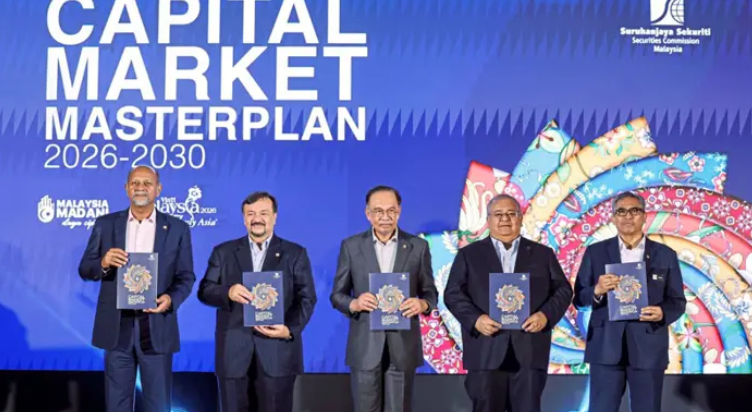
MALAYSIA’S capital market stands at an important crossroads.
Over recent years, regulators and policymakers have introduced a series of commendable initiatives aimed at broadening participation, improving fundraising accessibility, and strengthening the competitiveness of the domestic capital market ecosystem.
From the Capital Market Masterplan 2026-2030 (CMP4) to reforms surrounding the LEAP Market and alternative fundraising platforms, the direction is clear: Malaysia is aspiring to build a more dynamic, inclusive, and resilient capital market.
These aspirations are both timely and necessary.
However, while policy ambitions remain strong, practical realities suggest that greater attention must now be given to reducing transactional friction, improving regulatory coordination, and enhancing overall ecosystem efficiency.
A capital market does not function through regulations and exchanges alone.
It operates through an interconnected network of issuers, investors, advisers, valuers, lawyers, regulators, financiers and entrepreneurs.
When friction builds within this system, it ultimately affects transaction flow, fundraising appetite, and investor confidence.
Friction in corporate restructuring
One of the more pressing concerns relates to tax and transactional burdens arising from corporate restructuring exercises.
In practice, restructuring is almost always a fundamental necessity.
It is often a compulsory step for operational rationalisation, governance enhancement, succession planning, pre-initial public offering or IPO structuring, or group consolidation.
These steps are frequently prerequisites for companies to become investment-ready or suitable for listing.
Yet, under the current framework, internal restructuring may still trigger capital gains tax, real property gains tax, stamp duties, and other costs – even where there is no substantive change in ultimate beneficial ownership.
This creates unnecessary cash-flow strain and discourages legitimate restructuring aligned with Malaysia’s capital market development goals under CMP4.
Property-heavy groups are particularly affected due to limited relief mechanisms for genuine internal reorganisations.
The results are increasingly evident: onerous costs lead to companies delaying or abandoning rationalisation exercises, which would otherwise lead to increased capital market participation.
If Malaysia is serious about having more quality listings and strengthening corporate participation, tax frameworks must clearly distinguish between speculative transactions and authentic and necessary restructuring undertaken for long-term corporate development.
Transactional inefficiencies in deal execution
Several recurring inefficiencies continue to affect deal execution in Malaysia. One example is the stamp duty imposed on preliminary documents such as letters of engagement and non-disclosure agreements, even when transactions do not proceed.
Exploratory discussions are a normal part of commercial activity. Many transactions fail due to valuation gaps, financing constraints, or market conditions.
Yet, upfront stamping costs are still incurred even if there is no eventual deal.
Reducing or eliminating such costs would encourage greater deal activity, particularly among SMEs and growth-stage companies.
The need for regulatory harmonisation
In some cases, valuation approaches accepted for Securities Commission-related exercises differ from those applied for stamp duty or tax assessments.
These inconsistencies create uncertainty, complicate transaction planning, and increase the risk of disputes.
Greater harmonisation between regulatory and tax authorities would improve predictability, reduce compliance friction, and enhance market efficiency.
Beyond incentives: Ecosystem efficiency matters
Malaysia’s capital market competitiveness cannot rely solely on investor incentives.
Ecosystem efficiency is equally critical.
Investors are attracted to markets that offer clarity, consistency, governance integrity, depth, and ease of execution.
Companies are more likely to pursue listings when restructuring pathways are commercially viable and regulatory processes are predictable.
Conclusion
Capital market development is driven by incremental improvements that collectively strengthen confidence, efficiency and market participation.
The objective should extend to building a capital market ecosystem that is commercially sustainable, internationally competitive, and capable of supporting long-term economic growth.
A key policy priority is to distinguish genuine internal corporate restructuring from speculative transactions, with targeted relief mechanisms to ensure that necessary reorganisations are not unintentionally penalised.
Article by DATIN WONG MUH RONG
Disclaimer
The information provided in this report is of a general nature and has been prepared for information purposes only. It is not intended to constitute research or as advice for any investor. The information in this report is not and should not be construed or considered as an offer, recommendation or solicitation for investments. Investors are advised to make their own independent evaluation of the information contained in this report, consider their own individual investment objectives, financial situation and particular needs and should seek appropriate personalised financial advice from a qualified professional to suit individual circumstances and risk profile. The information contained in this report is prepared from data believed to be correct and reliable at the time of issuance of this report. While every effort is made to ensure the information is up-to-date and correct, Bond and Sukuk Information Platform Sdn Bhd (“the Company”) does not make any guarantee, representation or warranty, express or implied, as to the adequacy, accuracy, completeness, reliability or fairness of any such information contained in this report and accordingly, neither the Company nor any of its affiliates nor its related persons shall not be liable in any manner whatsoever for any consequences (including but not limited to any direct, indirect or consequential losses, loss of profits and damages) of any reliance thereon or usage thereof.
YOU MAY ALSO LIKE

ARTICLE
Oct 09, 2026
|
4 min read
ARTICLE
Oct 07, 2026
|
3 min read
ARTICLE
Oct 01, 2026
|
5 min read
ARTICLE
Sep 29, 2026
|
6 min read