


BIX ARTICLE
Digital euro clears key hurdle to rollout in EU Parliament
Jun 24, 2026
|
4 min read
Featured Posts
Social Bonds Illustrative Use-Of-Proceeds Case Studies Coronavirus
Jul 06, 2020
|
2 min read
Sustainable Banking Network (SBN) Creating Green Bond Markets
Jul 06, 2020
|
2 min read
Why is Inflation Making a Big Comeback After Being Absent for Decades in the U.S.?
Mar 24, 2022
|
7 min read
SC issues Corporate Governance Strategic Priorities 2021-2023
Mar 29, 2022
|
3 min read
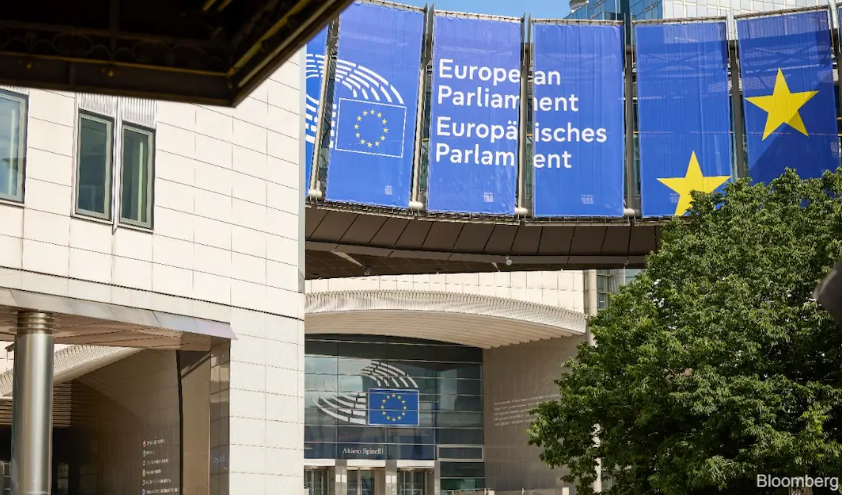
The Parliament’s ECON committee in Brussels on Tuesday backed a plan to create both online and offline versions of the currency, which the European Central Bank aims to roll out by 2029
(June 23): European Union lawmakers cleared the way for talks on the legal framework that will underpin the digital euro, a project deemed vital to the bloc’s monetary independence.
The Parliament’s ECON committee in Brussels on Tuesday backed a plan to create both online and offline versions of the currency, which the European Central Bank aims to roll out by 2029. The move paves the way for final negotiations by the legislature with governments and the European Commission to begin.
“We welcome that the European Parliament’s ECON Committee has agreed on its position on the single currency package, which will safeguard euro cash as legal tender while also shaping the digital euro,” the ECB said in a statement.
Fears about an over-reliance on US payment providers like Visa and Mastercard have added fresh impetus to an initiative that was launched in 2021 but got bogged down by wrangling among national governments and within the legislature.
The spread of mainly dollar-based stablecoins championed by Donald Trump has also prompted concern among EU governments.
Since a commission proposal in 2023, it took more than two years for member states to agree on a common approach and, until today, for Parliament to do so as well. A major obstacle was that some within the chamber favoured a solution from the private sector.
In the parliament’s discussions, one of the most controversial issues was whether to launch both online and offline versions of the digital euro.
Rapporteur Fernando Navarrete, a member of the centre-right European People’s Party, had proposed an offline variant, with an online counterpart coming in a second stage only if the private sector failed to deliver an alternative on time.
The ECB pushed back against that idea, saying both versions would be needed to reap the full benefits of the digital money. The Parliament supported that notion in February.
In a statement after the vote, Navarrete insisted that the move to create a digital euro won’t prevent the use of physical money.
“The goal is not to push anyone towards a particular form of payment, but to offer more options and preserve freedom of choice,” he said. “We want those who wish to continue using cash to be able to do so and for those who prefer digital means to also have a secure European alternative provided by the European Central Bank.”
In a 12-month pilot phase of the digital euro, the ECB will assess a beta version to validate infrastructure in real-life situations. Participants will include selected payment service providers licensed in the euro area and selected merchants.
In parallel to the retail version of the digital euro, the ECB has intensified work on a wholesale central-bank digital currency. In March, it unveiled a roadmap to enable settling distributed-ledger-technology transactions using central-bank money and said it aims to have a blueprint for the so-called Appia initiative in 2028.
In the meantime, it will launch a short-term solution — Pontes — linking DLT platforms and its existing Target services in the third quarter of 2026.
Uploaded by Arion Yeow
Article By Mark Schroers, Jana Randow & Jorge Valero / Bloomberg
Source: Digital euro clears key hurdle to rollout in EU Parliament (23 Jun 2026, 07:48 pm). The Edge Malaysia. Retrieved from https://theedgemalaysia.com/node/807993
Disclaimer
The information provided in this report is of a general nature and has been prepared for information purposes only. It is not intended to constitute research or as advice for any investor. The information in this report is not and should not be construed or considered as an offer, recommendation or solicitation for investments. Investors are advised to make their own independent evaluation of the information contained in this report, consider their own individual investment objectives, financial situation and particular needs and should seek appropriate personalised financial advice from a qualified professional to suit individual circumstances and risk profile. The information contained in this report is prepared from data believed to be correct and reliable at the time of issuance of this report. While every effort is made to ensure the information is up-to-date and correct, Bond and Sukuk Information Platform Sdn Bhd (“the Company”) does not make any guarantee, representation or warranty, express or implied, as to the adequacy, accuracy, completeness, reliability or fairness of any such information contained in this report and accordingly, neither the Company nor any of its affiliates nor its related persons shall not be liable in any manner whatsoever for any consequences (including but not limited to any direct, indirect or consequential losses, loss of profits and damages) of any reliance thereon or usage thereof.
YOU MAY ALSO LIKE

ARTICLE
Oct 21, 2026
|
3 min read
ARTICLE
Oct 19, 2026
|
6 min read
ARTICLE
Oct 18, 2026
|
5 min read
ARTICLE
Oct 16, 2026
|
5 min read