


BIX ARTICLE
Malaysia, Mexico most at risk from Japan carry unwind — HSBC
Jan 29, 2026
|
3 min read
Featured Posts
Social Bonds Illustrative Use-Of-Proceeds Case Studies Coronavirus
Jul 06, 2020
|
2 min read
Sustainable Banking Network (SBN) Creating Green Bond Markets
Jul 06, 2020
|
2 min read
Why is Inflation Making a Big Comeback After Being Absent for Decades in the U.S.?
Mar 24, 2022
|
7 min read
SC issues Corporate Governance Strategic Priorities 2021-2023
Mar 29, 2022
|
3 min read
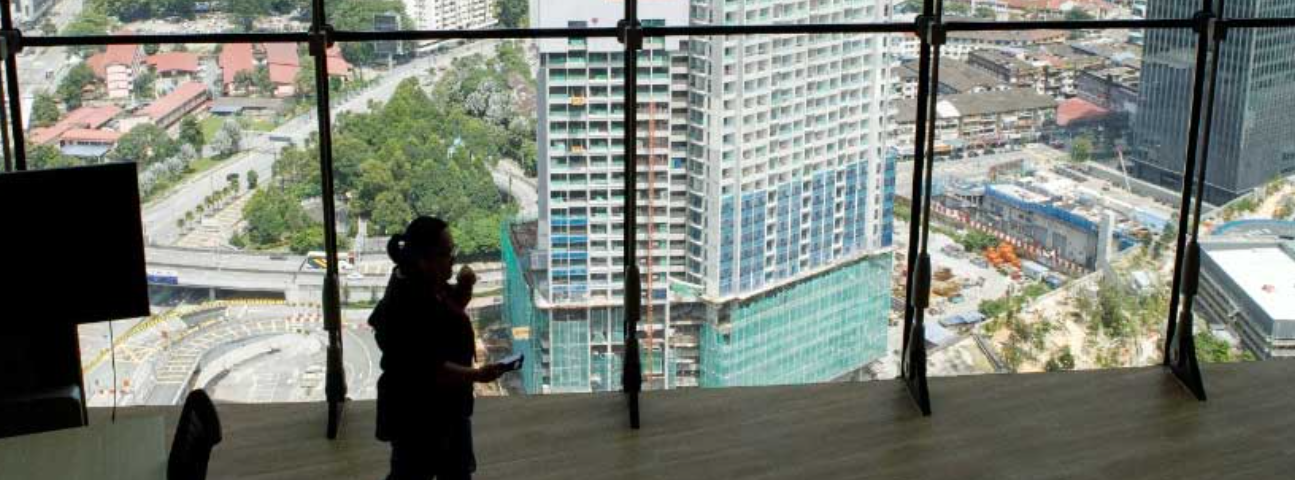
An analysis of Japanese investors’ holdings of emerging-market bonds and equities shows that Malaysia, Chile and Mexico are 'disproportionately exposed'
|
An analysis of Japanese investors’ holdings of emerging-market bonds and equities shows that Malaysia, Chile and Mexico are “disproportionately exposed”, strategists Alastair Pinder and Pankaj Agarwala wrote in a note.
“A sharp JGB selloff could also prompt repatriation of overseas equity holdings and on this measure Taiwan, India and South Africa appear vulnerable,” they added.
While a potential carry trade unwind — in which investors sell higher-yielding assets to close out yen-funded positions — is “the biggest risk”, odds of such an event in the near term are limited, the strategists wrote.
Last week’s sudden rout in JGBs — which sent local yields surging to record highs and sparked volatility across world markets — has put traders on watch for any signs that Japanese investors are moving their money back home. Some US$5 trillion (RM19.77 trillion) of the country’s capital is deployed overseas, and that’s before accounting for the yen that foreign funds have borrowed for their wagers in financial assets around the world.
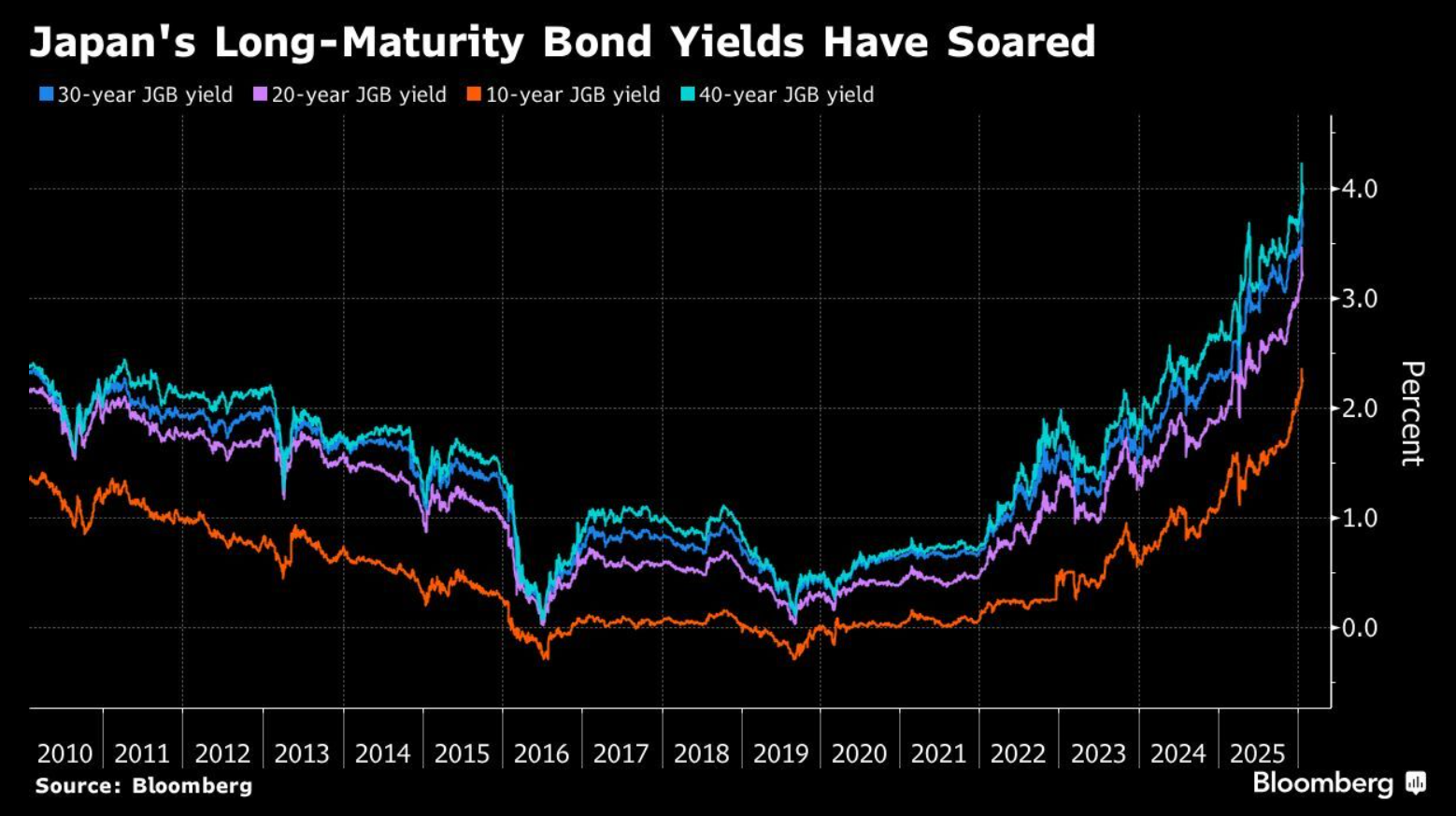
Higher JGB yields also risk putting upward pressure on bond yields globally, which in turn would hurt valuations, the HSBC strategists wrote in a note dated Jan 26. In this regard, an analysis of relative market returns with changes in the 10-year US yield shows that Korea and Taiwan are most at risk, they added.
The JGB rout came as Japanese Prime Minister Sanae Takaichi’s plans to cut taxes and boost spending spurred concerns about fiscal largesse. Traders are on guard for increased volatility in markets ahead of an election on Feb 8 and given increased talk of an intervention by authorities to support the yen.
Uploaded by Arion Yeow
BY PRIMA WIRAYANI BLOOMBERG
Disclaimer
The information provided in this report is of a general nature and has been prepared for information purposes only. It is not intended to constitute research or as advice for any investor. The information in this report is not and should not be construed or considered as an offer, recommendation or solicitation for investments. Investors are advised to make their own independent evaluation of the information contained in this report, consider their own individual investment objectives, financial situation and particular needs and should seek appropriate personalised financial advice from a qualified professional to suit individual circumstances and risk profile. The information contained in this report is prepared from data believed to be correct and reliable at the time of issuance of this report. While every effort is made to ensure the information is up-to-date and correct, Bond and Sukuk Information Platform Sdn Bhd (“the Company”) does not make any guarantee, representation or warranty, express or implied, as to the adequacy, accuracy, completeness, reliability or fairness of any such information contained in this report and accordingly, neither the Company nor any of its affiliates nor its related persons shall not be liable in any manner whatsoever for any consequences (including but not limited to any direct, indirect or consequential losses, loss of profits and damages) of any reliance thereon or usage thereof.
YOU MAY ALSO LIKE

ARTICLE
Oct 26, 2026
|
4 min read
ARTICLE
Oct 26, 2026
|
2 min read
ARTICLE
Oct 21, 2026
|
3 min read
ARTICLE
Oct 19, 2026
|
6 min read