


BIX ARTICLE
Singapore’s covered bond boom is largely a DBS story
Sep 17, 2026
|
5 min read
Featured Posts
Social Bonds Illustrative Use-Of-Proceeds Case Studies Coronavirus
Jul 06, 2020
|
2 min read
Sustainable Banking Network (SBN) Creating Green Bond Markets
Jul 06, 2020
|
2 min read
Why is Inflation Making a Big Comeback After Being Absent for Decades in the U.S.?
Mar 24, 2022
|
7 min read
SC issues Corporate Governance Strategic Priorities 2021-2023
Mar 29, 2022
|
3 min read
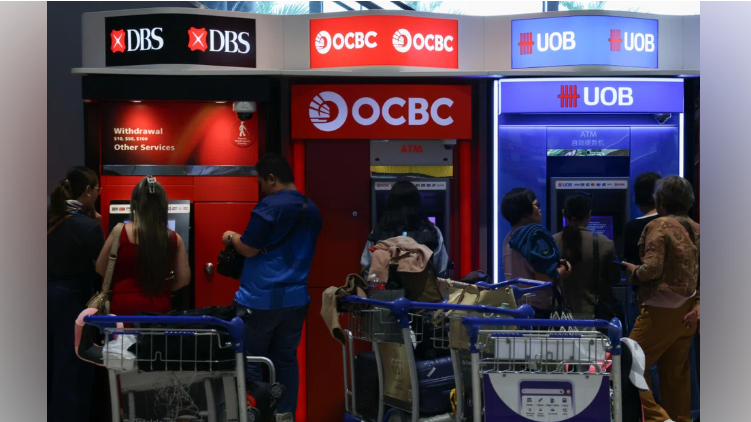
Covered bonds issuance hit a record S$11 billion in 2025, while the outstanding market has expanded at a compound annual growth rate of 15% since 2021. PHOTO: TAY CHU YI, BT
Covered bonds outstanding reached S$29.8 billion in 2025, up from S$17.3 billion four years earlier, the Monetary Authority of Singapore (MAS) said in its latest annual update on the corporate debt market released on Monday (Sep 14).
Issuance hit a record S$11 billion last year, while the outstanding market has expanded at a compound annual growth rate of 15 per cent since 2021.
At first glance, this might suggest that Singapore banks are collectively making greater use of covered bonds as a source of funding.
A closer look at the three local lenders shows a more uneven picture.
Based on the banks’ reported figures, DBS had about S$18.5 billion of covered bonds outstanding at end-2025, more than triple the S$5.7 billion it had in 2021.
UOB’s amount was almost unchanged, at S$7.8 billion versus S$7.9 billion four years earlier. OCBC went the other way, with its covered bonds falling from S$3.5 billion to S$1.5 billion over the same period.
Much of the growth among the three banks, in other words, appears to have come from DBS.
Mortgages as a source of funding
A covered bond is debt issued by a bank and backed by a pool of assets, typically residential mortgages. These mortgages are set aside, or “ring-fenced”, for the benefit of bondholders.
Investors have recourse both to the issuing bank and to the underlying pool of mortgages, giving them an additional layer of protection compared with holders of ordinary unsecured debt.
The mortgages remain on the bank’s balance sheet. For the bank, covered bonds provide another source of longer-term wholesale funding – money raised from financial markets rather than from customer deposits.
Their additional security can also allow banks to raise such funding more cheaply than through comparable unsecured debt.
The instrument is also relevant to earnings, even if the amounts involved are still too small to make a material difference on their own.
DBS, for instance, had about S$610 billion of customer deposits at end-2025, against S$18.5 billion of covered bonds. The latter was equivalent to only about 3 per cent of deposits.
But funding costs matter more when interest margins are under pressure.
As loan yields reprice lower when rates fall, banks have less room to absorb expensive funding without squeezing net interest margin – a key measure of the income earned from lending relative to the cost of funding those assets.
Covered bonds can help at the margin by giving a bank another relatively efficient source of longer-term funding, as well as access to a different pool of investors.
For DBS, their growing use is therefore less about replacing deposits than adding another option to the funding mix.
More room to issue
Regulation has also given banks greater room to make use of covered bonds.
In 2020, MAS raised the asset encumbrance limit for locally incorporated banks to 10 per cent of total assets from 4 per cent. Put simply, banks were allowed to pledge a larger portion of their assets to support covered bonds.
MAS’ latest report noted that Singapore’s framework has also evolved through changes to collateral eligibility and the introduction of a tax incentive.
The higher limit did not require banks to issue more covered bonds, but it removed one constraint on how extensively they could use them.
It also shows why the growth of Singapore’s covered bond market should not be read as a common shift in strategy among all three banks.
More than a decade after Singapore introduced its covered bond framework in 2013, the market has clearly become more established. Yet, even after several years of growth, covered bonds remain small beside the local banks’ deposit bases.
That is perhaps the more useful perspective for investors. Covered bonds can make funding more flexible and, at the margin, more efficient. DBS appears to have taken greater advantage of that flexibility than its peers.
Article by Renald Yeo
Disclaimer
YOU MAY ALSO LIKE

ARTICLE
Oct 07, 2026
|
3 min read
ARTICLE
Oct 01, 2026
|
5 min read
ARTICLE
Sep 29, 2026
|
6 min read
ARTICLE
Sep 29, 2026
|
3 min read