


BIX ARTICLE
US yen intervention marks perfect storm in forex, bond markets
Aug 06, 2026
|
6 min read
Featured Posts
Social Bonds Illustrative Use-Of-Proceeds Case Studies Coronavirus
Jul 06, 2020
|
2 min read
Sustainable Banking Network (SBN) Creating Green Bond Markets
Jul 06, 2020
|
2 min read
Why is Inflation Making a Big Comeback After Being Absent for Decades in the U.S.?
Mar 24, 2022
|
7 min read
SC issues Corporate Governance Strategic Priorities 2021-2023
Mar 29, 2022
|
3 min read
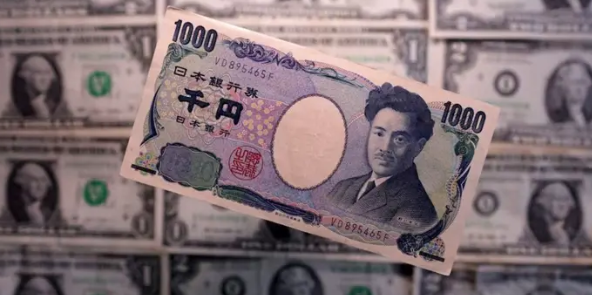
US Treasuries, JGBs and the yen have all undergone periods of heavy stress in recent decades, but rarely have all three been under such pressure at the same time. — Reuters
Markets have largely shrugged off this doomsday scenario for decades – and for good reason – but the historic joint US-Japan currency intervention last week is a reminder that they shouldn’t get complacent.
For years, most experts believed that China, America’s main economic and geopolitical rival, would be the country likely to trigger such a crisis.
But Beijing’s stash of Treasuries has actually shrunk over the past decade.
From a purely financial perspective, Japan, arguably America’s biggest ally in Asia, poses as much of a threat due to the sheer scale of its exposure to US debt.
It’s officially America’s biggest international creditor, to the tune of US$1.14 trillion.
Of course, no one expects Tokyo to willingly light the fuse on this potential tinderbox, but that doesn’t mean accidents can’t happen, particularly now.
Markets face a perfect storm: extreme weakness in the yen, stress in Japanese government bonds (JGBs) and parts of the Treasury curve, and credibility issues at both the US Federal Reserve (Fed) and Bank of Japan (BoJ).
This may help explain US Treasury Secretary Scott Bessent’s unconventional joint currency intervention with Japan last Friday to support the ailing yen, which had fallen to a 40-year low against the dollar, while JGB yields hit record highs.
The veteran currency trader may have feared that volatility in JGBs could spill over into the US bond market at a time when longer-term yields were already hitting multi-decade highs.
That would not be an unreasonable worry. While the US$29 trillion US Treasury market is the most liquid in the world, prices would not be completely immune to significant Japanese selling.
Moreover, any unravelling of the ties that bind the world’s two biggest bond markets and the world’s second-most important exchange rate could ripple through the financial system in unexpected and dangerous ways.
US Treasuries, JGBs and the yen have all undergone periods of heavy stress in recent decades, but rarely have all three been under such pressure at the same time.
And this comes as market confidence in new Fed chair Kevin Warsh and the BoJ is running dry.
Warsh appeared ambivalent about the Fed’s 2% inflation target during his press conference last week after the central bank left interest rates on hold, which unnerved the bond market.
The “term premium”, an estimate of the extra compensation investors demand for buying 10-year Treasuries, spiked sharply in response.
Ultra-long Treasury yields also leaped to their highest level since 2007.
This may indicate that investors think the Fed will accept higher-for-longer inflation and that Warsh would rather let the market tighten financial conditions than raise policy rates.
That’s a dangerous path for policymakers, as it risks unmooring inflation expectations and destroying central bank credibility.
Meanwhile, in Japan, the situation is even more precarious.
Long-dated JGB yields have shot up to all-time highs, while the two-year and benchmark 10-year JGB yields have hit their loftiest levels in three decades.
This reflects investors’ concerns about Japan’s monetary and fiscal policy.
While the BoJ is “normalising” policy after decades of holding interest rates near zero, it is raising them at a chronically slow pace.
Japan’s nominal policy rate of 1.0% is deeply negative in real terms, the lowest in the developed world.
Investors are thus losing confidence in the central bank, just as they are also calling into question Prime Minister Sanae Takaichi’s plans for a record-breaking spending splurge.
Given this backdrop, it’s little wonder that the yen found itself at a 40-year low near 164 per dollar last week.
On a real effective exchange rate basis, it has never been lower.
Cue the extraordinary coordinated intervention between Washington and Tokyo.
It’s certainly not Japan’s first intervention in recent years.
The Finance Ministry has conducted several rounds of yen-buying since 2022, amounting to more than US$300bil.
Some of that was financed via dollar deposits held by Japan, repurchase facilities, and swaps.
But some of it involved the sale of US bonds.
Which brings us back to what may be keeping policymakers in Washington up at night.
Any large sale of US Treasuries could put further upward pressure on yields.
A steep rise in borrowing costs, especially from current levels, is in no one’s interest, especially not President Donald Trump and Secretary Bessent, whose sensitivity to the 10-year yield is a matter of public record.
Some investors said a 10-year Treasury yield of 5% is a ceiling the Trump administration will not want to see breached, especially with the midterm elections only a few months away and the United States stuck in a seemingly intractable war with Iran.
History has shown that investors and policymakers have been right to ignore the risk of a Treasury fire sale over the past few decades, no matter how much perma-bears have “cried wolf”.
But history also shows that the biggest risk in markets is the belief that there is none. — Reuters
Jamie McGeever is a columnist for Reuters. The views expressed here are the writer’s own.
Disclaimer
YOU MAY ALSO LIKE

ARTICLE
Oct 21, 2026
|
3 min read
ARTICLE
Oct 19, 2026
|
6 min read
ARTICLE
Oct 18, 2026
|
5 min read
ARTICLE
Oct 16, 2026
|
5 min read