


BIX ARTICLE
Are non-dollar stablecoins profitable?
May 05, 2026
|
6 min read
Featured Posts
Social Bonds Illustrative Use-Of-Proceeds Case Studies Coronavirus
Jul 06, 2020
|
2 min read
Sustainable Banking Network (SBN) Creating Green Bond Markets
Jul 06, 2020
|
2 min read
Why is Inflation Making a Big Comeback After Being Absent for Decades in the U.S.?
Mar 24, 2022
|
7 min read
SC issues Corporate Governance Strategic Priorities 2021-2023
Mar 29, 2022
|
3 min read
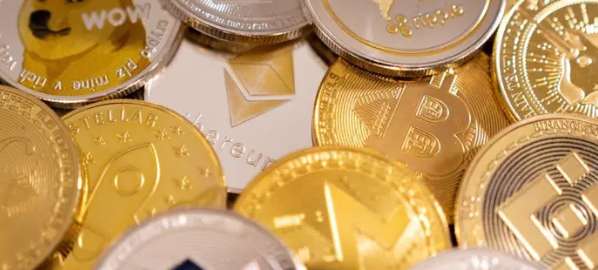
FILE PHOTO: A representation of cryptocurrencies in this illustration taken, January 24, 2022. REUTERS/Dado Ruvic/Illustration//File Photo
Sure, it’s technically feasible but is there a business case for it? As with all great ideas, nuance matters greatly.
Stablecoins are a very popular type of digital asset.
In this example, they are denominated in our local currency and issued by a non-bank private entity.
They may seem similar to emoney but aren’t the same. Fundamentally as a business, they are worlds apart.
First, and the most obvious, is market concentration. This is at both the currency and issuer levels.
Nearly 99.8% of the total stablecoins in circulation is pegged to the US dollar, which means all other currencies are as good as rounding errors.
What’s more, nearly 90% of total stablecoin trading volume comes from tether and circle, which makes the market effectively duopolistic.
Although other currencies are represented in the Top 100 (as tracked by DefiLlama), they are few and far down the list.
Notably the largest non-dollar stablecoin by market cap is the Russian ruble backed A7A5, but it’s excluded from count due to sanctions.
This is followed by the euro with multiple fast-growing issuers.
Asian stablecoins also show up such as the Japanese yen, South Korean won, alongside Asean fiats like the Singapore dollar and Indonesian rupiah.
But it should be noted that demand remains low for those outside the Group of 20. And mind you, this is all within the 0.2% residual share, give or take.
As the crypto analytics firm Artermis observed: “Nobody wants non-US dollar stablecoins.
Five years, dozens of new issuers, every major currency tried, and none have made any progress in dethroning the dollar.”
Second, is the capital outlay in a new regulated environment. Turns out you need to have extremely deep pockets to ‘be your own private central bank’ and the profits won’t roll in unless you’re seriously large.
All major jurisdictions now require issuers to back their stablecoins on a one-to-one basis, either on a full-reserve or narrow banking model, or a hybrid of the two.
This is more conservative than banks, which typically operate on fractional reserves. Banks can keep a fraction of deposits and lend out the rest, creating a “money multiplier effect” that circulates across the banking system - but stablecoin issuers cannot.
Some regulators ask for additional capital ratio (circa 2% to 3%) as a buffer.
Also, the composition of reserves must be in high quality liquid assets or on-demand bank deposits, which have lower yield than fixed income and commercial securities.
This means issuers would stand to make less money from their reserves than before. They need a much bigger balance sheet to stay profitable.
Even with various transaction fees to diversify its revenue structure, it won’t be enough. Scaling up has become existential for a stablecoin business.
A small issuer will struggle as it is prone and more vulnerable to market shocks.
It cannot reallocate idle capital, cannot de-peg to absorb volatility, and must be the backstop for redemption; no questions asked.
In other words, it is perennially stuck in a low-return high risk model.
Third, is the competitive set for your stablecoin.
Chances are, it can be substituted. For mass payments, central bank digital currencies could arguably do a better job after the eYuan’s success.
For wholesale settlement, there are already tokenised solutions using deposits, money market funds, and real world assets.
If the idea is to build retail propositions, please heed the research findings of Visa (2024): Over 90% of stablecoin transactions are driven by high frequency trading bots or algorithms.
Only 7% are linked to organic human-led activity of paying for goods and services!
Crypto users use stablecoins not for spending but trading, in other words to deploy and shuffle liquidity between exchanges.
Nonetheless consumer behaviour is moldable and evolves over time.
It helps when you have a large captive ecosystem to tap into, or those with incumbent payment infra.
Previously, Facebook failed to launch its Libra stablecoin due to regulatory hurdles and despite several iterations.
Today, Telegram’s nearly one billion users can make in-app payments and peer-to-peer transfers using US dollar tether, with zero-fee tether purchases.
PayPal US dollar is integrated directly into its parent Paypal’s platform in 70 countries. In Singapore, StraitsX can be used to top up GrabPay wallets and pay merchants via Alipay+.
The excitement for stablecoins isn’t misplaced, just misunderstood. It’s not retail-centric like e-money and it’s more capital-intensive than a bank. The market is highly dollarised and dominated.
As clichéd as it sounds, this is one of those “go big or go home” theses.
Ultimately, none of the above matters if local regulators have no appetite for it, as the case may be.
Got to admit though, a ringgit stablecoin does have a nice “ring” to it!
Edmund Yong is a director of the Generative AI Association of Malaysia and ambassador of the Global Blockchain Business Council founded in Davos. The views expressed here are the writer’s own.
Article by EDWARD YONG
Disclaimer
The information provided in this report is of a general nature and has been prepared for information purposes only. It is not intended to constitute research or as advice for any investor. The information in this report is not and should not be construed or considered as an offer, recommendation or solicitation for investments. Investors are advised to make their own independent evaluation of the information contained in this report, consider their own individual investment objectives, financial situation and particular needs and should seek appropriate personalised financial advice from a qualified professional to suit individual circumstances and risk profile. The information contained in this report is prepared from data believed to be correct and reliable at the time of issuance of this report. While every effort is made to ensure the information is up-to-date and correct, Bond and Sukuk Information Platform Sdn Bhd (“the Company”) does not make any guarantee, representation or warranty, express or implied, as to the adequacy, accuracy, completeness, reliability or fairness of any such information contained in this report and accordingly, neither the Company nor any of its affiliates nor its related persons shall not be liable in any manner whatsoever for any consequences (including but not limited to any direct, indirect or consequential losses, loss of profits and damages) of any reliance thereon or usage thereof.
YOU MAY ALSO LIKE

ARTICLE
Oct 21, 2026
|
3 min read
ARTICLE
Oct 19, 2026
|
6 min read
ARTICLE
Oct 18, 2026
|
5 min read
ARTICLE
Oct 16, 2026
|
5 min read