


BIX ARTICLE
Wall Street sees signs of bond-market angst
Aug 11, 2026
|
5 min read
Featured Posts
Social Bonds Illustrative Use-Of-Proceeds Case Studies Coronavirus
Jul 06, 2020
|
2 min read
Sustainable Banking Network (SBN) Creating Green Bond Markets
Jul 06, 2020
|
2 min read
Why is Inflation Making a Big Comeback After Being Absent for Decades in the U.S.?
Mar 24, 2022
|
7 min read
SC issues Corporate Governance Strategic Priorities 2021-2023
Mar 29, 2022
|
3 min read
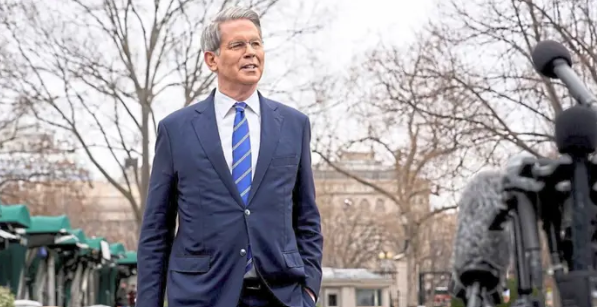
Fresh signal: Bessent standing outside the White House in Washington. He is moving to stem the ascent of long-term bond rates, which climbed due to inflation and nearly US$2 trillion annual budget deficits that are resulting in supply of new debt. — Bloomberg
NEW YORK: Wall Street traders and strategists say US Treasury Secretary Scott Bessent is sending fresh signals that he’s eager to keep bond yields from spiking higher.
Over the course of a week, he took steps that they see as aimed at easing pressure on the Treasury market after long-term rates surged to a 19-year high, pushing up costs for everyone from home buyers to vast swaths of corporate America.
First, he staged the United States’s first currency intervention to prop up the yen since 1998, mitigating the risk that Japan would dump US government bonds to raise the dollars needed to buy the currency on its own.
And he pointed to a Federal Reserve (Fed) facility that Tokyo could tap in the future.
Then at last week’s quarterly bond sales announcement, a subtle and unexpected change to his department’s guidance was seen as opening the door to potential cuts in long-bond sales.
Bessent has also been taking to the airwaves and social media to defend the new communications strategy of Fed chairman Kevin Warsh, who caused yields to surge after last month’s meeting when he failed to explain how – or when – the central bank may act to bring down inflation.
Taken together, the moves indicate that Bessent is attempting to do what’s in his power to stem the ascent of long-term bond rates, which have climbed due to persistent inflation and nearly US$2 trillion annual budget deficits that are resulting in an ever-increasing supply of new debt.
“The Fed and the Treasury have to be getting concerned about the level of long-end rates,” said Priya Misra, portfolio manager at JPMorgan Asset Management.
“The intervention with Japan, support for Warsh and a possible reduction in long-end supply can be attempts for Treasury to signal that they are aware of the rate-market move and do not hesitate to use the different tools at their disposal.”
In the end, Bessent’s influence is limited, given the bigger forces at work.
Last Friday, Treasury yields dipped after a Labour Department report showed significant weakening in the job market, a sign the economy is cooling.
A lower-than-expected rise in the cosumer-price index last Wednesday could reinforce the market’s move.
Yet the Treasury’s actions were seen as a sign that it’s willing to do what it can to get borrowing costs lower, which President Donald Trump has repeatedly said is a priority.
Spokespeople for the Treasury didn’t respond to a request for comment.
Early last year, after Trump’s return to the White House, Bessent said the administration’s main focus was on lowering 10-year yields, which serve as a baseline for mortgages and other types of loans.
He said its fiscal policies would help accomplish that goal by reducing government spending, helping to ease inflation.
In November, while referring to his job as “the nation’s top bond salesman”, Bessent, a former hedge fund manager, said Treasury yields are a “strong barometer for measuring success”.
But the adminstration’s spending cuts had little impact and its tax reductions will add significantly to the government debt in the coming decade.
The attacks on the Fed from Trump, who last week revived his threat to fire Governor Lisa Cook, have worried investors by jeopardising the central bank’s independence.
And the Iran war’s oil-price spike has created a fresh inflation shock that’s helped push the 10-year yield up to around 4.65%, higher than it was at the start of Trump’s second term.
“With the spending policy that’s been adopted and the war, it’s going to be hard to relieve pressure on the long end,” said John Velis, US macro strategist at BNY.
Hence, the Treasury’s recent actions were seen as an effort to prevent long-term rates from climbing even more.
Bessent’s decision to buy yen was ostensibly aimed at helping an ally.
But it could ease pressure on Japan’s bond market, where a rise in yields has contributed to the sell-off in Treasuries recently, as well as curb Japan’s need to sell US bonds to get the dollars needed to defend its currency.
He also advocated for an increase to the Fed’s Foreign and International Monetary Authorities Repo Facility, which allows foreign central banks to borrow dollars against their holdings of Treasuries.
“We’ve apparently reached a point of such fragility in the US Treasury market with the rise in long rates that we are encouraging foreign holders not to sell,” said Peter Boockvar, chief investment officer at Onepoint Bfg. — Bloomberg
Disclaimer
YOU MAY ALSO LIKE

ARTICLE
Oct 21, 2026
|
3 min read
ARTICLE
Oct 19, 2026
|
6 min read
ARTICLE
Oct 18, 2026
|
5 min read
ARTICLE
Oct 16, 2026
|
5 min read