


BIX ARTICLE
Is it time for Malaysian corporates to rethink ESG?
May 18, 2026
|
7 min read
Featured Posts
Social Bonds Illustrative Use-Of-Proceeds Case Studies Coronavirus
Jul 06, 2020
|
2 min read
Sustainable Banking Network (SBN) Creating Green Bond Markets
Jul 06, 2020
|
2 min read
Why is Inflation Making a Big Comeback After Being Absent for Decades in the U.S.?
Mar 24, 2022
|
7 min read
SC issues Corporate Governance Strategic Priorities 2021-2023
Mar 29, 2022
|
3 min read
These developments can be unwelcome distrac- tions from advancing sustainability. Given such pres- sures, should businesses de-prioritise ESG?
While the question itself may sound deceptively simple, a well-considered response requires us to unbundle the term "ESG" by examining some of its most critical aspects.
THERE IS NO ESCAPING THE IMPACTS OF CLIMATE CHANGE
Let's start with the most critical ESG theme: climate change. Malaysians have felt its effects first-hand - scorching heat, sudden downpours and purported "once-in-a-century" floods that seem to occur once every few years.
In fact, Asean is among the world's most climate-vulnerable regions. In that context, ignoring climate risk is akin to playing a game of chance with nature - and the house always wins. Be it damaged assets, supply chain disruption, factory closures, higher insurance premiums or the challenge of securing recovery funding, exposure equates to ever- present vulnerability. Therefore, for corporates oper- ating here, managing climate-related impacts is imperative for business resilience and survivability.
Bottom line: Certain ESG themes, such as climate change, are material and unavoidable. Simply label- ling it as a hoax does not make it disappear. The question isn't whether to pursue ESG, but instead what to prioritise.
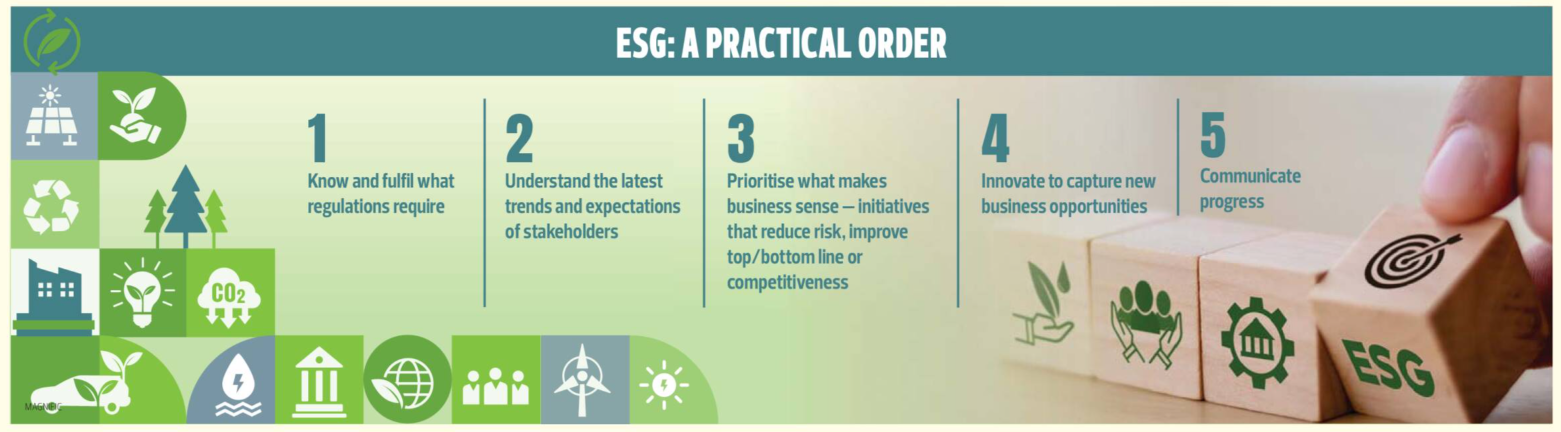
WHATEVER MAKES GOOD BUSINESS SENSE
Sitting at the intersection of climate and economics is energy the lifeblood of modern economies. Reliability and affordability are paramount to meeting the world's growing energy needs. Yet geopolitics has made energy markets jittery: Russia-European Union (EU) gas disputes, tariffs on Indian imports of Russian oil and the closure of the Strait of Hormuz have all underscored the fragility of fossil fuel dependence. More importantly, these point to the increasing fragmentation and erosion of trust between coun- tries that supply energy and those that purchase it.
In a world beset by shifting allegiances and economic coercion, every country's top priority is to boost energy sovereignty or independence. Diversifying energy sources is the obvious play; this is where deployment of renewables (wherever possible) is preferred.
Additionally, renewable energy is now cheaper than fossil fuels. It's economically viable, less exposed to price volatility and strengthens security of supply - what's not to like? Even if the US is exiting (again) from the Paris Agreement, the global energy transi- tion is unlikely to stall.
For companies, renewables reduce exposure to electricity price fluctuations, cut operational emis- sions and, where relevant, ease carbon tax burdens - all of which help the bottom line, especially when paired with energy efficiency measures.
Energy initiatives are but one of many examples. Simply put, all ESG initiatives that make good busi- ness sense should be pursued.
AND THEN, THERE ARE THE COMPLIANCE-RELATED COMPONENTS
Even though forgoing ESG may come at a cost, could Malaysian corporates still opt to de-prioritise ESG? Not really.
On the reporting front, under Malaysia's National Sustainability Reporting Framework (NSRF), listed and large non-listed companies must adopt International Sustainability Standards Board-aligned reporting - including disclosures on material sustainability risks and opportunities, especially climate-related ones. This strong regulatory stance is reasonable given the severe climate impacts Malaysia may face in the coming years. Preparedness is non-negotiable.
With mandatory requirements, businesses are compelled to show progress over time. Consider this: How would a business disclose robust climate risk management if no such underlying practices exist? So, mandatory reporting compels climate action. Furthermore, global demands such as the EU's Carbon Border Adjustment Mechanism, deforesta- tion rules and human rights due diligence require- ments - push companies to manage ESG impacts or risk losing access to markets and supply chains.
SHOULD WE GO ANTI-ESG INSTEAD?
ESG's value becomes clearer when we scrutinise the anti-ESG movement in the US. Despite much polit- ical fanfare, investor support for anti-ESG proposals remains largely negligible. Across the 2024 and 2025 annual general meeting proxy seasons in the US, more than 200 anti-ESG proposals were filed, of which not even one passed. Average support? A dismal 2%.
Investors, it seems, aren't buying what the move- ment is selling.
Outside the US, the anti-ESG rhetoric did trigger some softening of sustainability requirements in juris- dictions like the EU, spanning corporate reporting, carbon taxation and supply chain due diligence. Overall ESG sentiment also weakened considerably in 2025, with sustainability-themed funds recording substantive net outflows.
In Asean, the story is very different. The latest Asean ESG Alpha report showed that while global sentiment wobbled in 2025, Asean accelerated. Asean countries reaffirmed their decarbonisation commitments by ratcheting up emissions reduction targets. ESG quality among Asean corporates has also shown sustained improvements. Importantly, companies with lower ESG risk outperformed regional benchmarks across one-, three- and five-year horizons.
In short, the primary drivers for ESG across Asean are structural and long term, including the imposition of various ESG requirements, supply chain demands and urgent risk mitigation against climate change. The ESG backlash simply does not match economic reality here.
The lesson: Despite noise and headwinds else- where, Asean corporates should remain pro-ESG.
TAILWINDS PROVIDING FURTHER IMPETUS
Malaysia remains committed to the United Nations' Sustainable Development Goals (SDGs), balancing growth with environmental sustainability and social inclusion. The country also aspires to achieve net zero by 2050 - a trajectory unchanged despite global turbulence of late.
The recent roll-out of various national frame- works reinforces these commitments: the National Energy Transition Roadmap (NETR), the National SDG Roadmap and the Long-Term Low Emissions Development Strategy, among others. The direction is unmistakable.
Regulators are equally proactive. Apart from the NSRF, Bank Negara Malaysia requires all financial institutions to assess significant environmental harm caused by the operations of their borrowers using its Climate Change Principle-based Taxonomy. ESG will (eventually) influence credit decisions and therefore, access to funding.
Separately, the Securities Commission Malaysia is also advancing financing of critical climate adapta- tion initiatives apart from issuing a Sustainable and Responsible Investment Taxonomy. Major institu- tional investors such as the Employees' Provident Fund and Permodalan Nasional Bhd have also set ambitious ESG targets for their respective portfolios.
These developments surface ample business oppor- tunities. Achieving NETR goals alone will require an estimated RM1.2 trillion to RM1.3 trillion in invest- ment by 2050. Key growth areas include renewable energy, energy efficiency and green mobility.
Corporates, being the engines of our economic growth, are central to the achievement of our sustain- able development agenda - by embracing ESG at the company level and influencing the supply chain.
Be it complementary national policies, height- ening stakeholder expectations or emerging busi- ness opportunities, ESG is here to stay.
Dr Yeoh Ken Kyid is the director of group sustainability at Bursa Malaysia
Article by YEOH KEN KYID
Source: Is it time for Malaysian corporates to rethink ESG? (May 18, 2026). The Edge Malaysia, ESG pullout, pg11
Disclaimer
The information provided in this report is of a general nature and has been prepared for information purposes only. It is not intended to constitute research or as advice for any investor. The information in this report is not and should not be construed or considered as an offer, recommendation or solicitation for investments. Investors are advised to make their own independent evaluation of the information contained in this report, consider their own individual investment objectives, financial situation and particular needs and should seek appropriate personalised financial advice from a qualified professional to suit individual circumstances and risk profile. The information contained in this report is prepared from data believed to be correct and reliable at the time of issuance of this report. While every effort is made to ensure the information is up-to-date and correct, Bond and Sukuk Information Platform Sdn Bhd (“the Company”) does not make any guarantee, representation or warranty, express or implied, as to the adequacy, accuracy, completeness, reliability or fairness of any such information contained in this report and accordingly, neither the Company nor any of its affiliates nor its related persons shall not be liable in any manner whatsoever for any consequences (including but not limited to any direct, indirect or consequential losses, loss of profits and damages) of any reliance thereon or usage thereof.
YOU MAY ALSO LIKE

ARTICLE
Oct 09, 2026
|
4 min read
ARTICLE
Oct 07, 2026
|
3 min read
ARTICLE
Oct 01, 2026
|
5 min read
ARTICLE
Sep 29, 2026
|
6 min read