


BIX ARTICLE
Fed’s bubble blind spot is cause for anxiety
Jun 25, 2026
|
6 min read
Featured Posts
Social Bonds Illustrative Use-Of-Proceeds Case Studies Coronavirus
Jul 06, 2020
|
2 min read
Sustainable Banking Network (SBN) Creating Green Bond Markets
Jul 06, 2020
|
2 min read
Why is Inflation Making a Big Comeback After Being Absent for Decades in the U.S.?
Mar 24, 2022
|
7 min read
SC issues Corporate Governance Strategic Priorities 2021-2023
Mar 29, 2022
|
3 min read
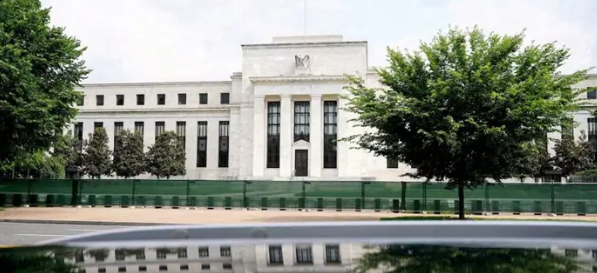
Whether you take the view of Warsh, Greenspan or former Fed chair Ben Bernanke, it still leaves us with the prospect that the Fed will allow a bubble to blow regardless. — Reuters
NEW Federal Reserve (Fed) chair Kevin Warsh is unlikely to differ much from the late Alan Greenspan on how the central bank should deal with financial asset bubbles – and that legacy offers little comfort to anyone.
During his almost two decades leading the Fed, Greenspan – who died on Monday at the age of 100 – routinely insisted the central bank should not try to deflate financial market bubbles in advance.
Instead, it should simply mop up the mess whenever one bursts.
His rationale hinged on the assumption that the Fed could never be certain what was a bubble and what was a structural investment boom.
Attempting to second-guess markets could cause unnecessary economic damage or distortions, and distract the central bank from its congressional mandates on prices and jobs.
But that approach saw Greenspan preside over two of the biggest bubbles in modern history: the dotcom boom and bust at the turn of the millennium, and a larger, more damaging credit bubble that burst between 2007 and 2008.
That second collapse wreaked global economic havoc for years, and its political implications are still being felt.
Some, including Warsh, defend the Fed’s unwillingness to rein in the parabolic rise of often loss-making Internet stocks in the late 1990s.
They argue it allowed a productivity-enhancing tech transformation to proceed, and that deep Fed easing after the market collapsed limited the economic fallout.
However, there are fewer apologists for the housing, mortgage and credit boom that followed that sharp easing.
Many also argue the Fed’s slow, predictable rebuilding of interest rates encouraged that boom.
A brutal recession ensued, followed by more than a decade of debt repair, slow growth, monetary policy and wealth distortions, and political upheaval.
Even if the Fed was not solely responsible for lax regulation and banking sector incompetence that contributed to that bust, it did little to lean against it in advance.
Mopping it up after the fact eventually worked, but over a long period and at great cost to the Treasury. It also required the extraordinary Fed balance sheet expansion that Warsh now thinks was a mistake.
Was it worth it in the end?
Greenspan himself acknowledged his mistake was an over-reliance on the self-interest of commercial bankers not to let their firms blow up.
But would more active monetary policy have done better in cooling either bubble before it burst?
“If the post mortem of recent monetary policy shows that the results of addressing the bubble only after it bursts are unsatisfactory, we would be left with less-appealing choices for the future,” Greenspan said in a speech in 2002.
“In that case, finding ways to identify bubbles and to contain their progress would be desirable, though history cautions prospects for success appear slim,” he added.
Ignore, then mop up
Warsh is assumed to share Greenspan’s reluctance to prick bubbles in advance.
This is although he has not addressed the question directly.
His remarks have focused more on extolling the virtues of allowing tech investment booms to run their course, rather than reining them in.
And his view on asset prices tends to dwell more on his belief that the Fed’s balance sheet expansion since 2008 over-inflated assets like stocks and bonds – assets that about half of Americans don’t own.
A bigger concern for many investors is that Warsh may be more symmetrical in his approach to market excesses than his central banking “role model”.
That could mean keeping the Fed clear of both wild market run-ups and crashes – effectively removing the presumed “Greenspan put” – or at least stalling if that required extraordinary balance sheet intervention.
Fasten your seatbelts if that’s true
Whether you take the view of Warsh, Greenspan or former Fed chair Ben Bernanke – who introduced bond buying and balance sheet expansion to avert a depression in 2008 – it still leaves us with the prospect that the Fed will allow a bubble to blow regardless.
That brings us back to the market parlor guessing game of the past few years: are we in bubble territory, driven by the artificial intelligence explosion?
The debate is well documented and inconclusive, split between those who say the spending and transformation are real and those who say valuations are overcooked and mispriced.
If it proves to be a bubble – and chip stock indices in the United States have doubled so far this year and quintupled over the past four – there is a reasonable question of whether the Fed is still deliberately missing the wider economic, price and financial stability issues that may be brewing.
Should it simply assume everything’s fine and mop it up after if it’s not?
One interesting vignette from the other side of the world this week offers another reason why central banks maybe should not stand so aloof from market excesses.
Perhaps they should treat them more like any other incoming economic data.
South Korea’s chip-heavy Kospi index has tracked a similar trajectory to the SOX.
There are reports that local households are ploughing windfall profits from outsized stock gains back into an already overheated property market.
Are similar windfall profits from US tech gains finding their way into other parts of an already stretched US economy?
And should that remain irrelevant to Fed calculations?
With the inflation in the United States running well above target, the rate rise now priced for later this year may be the least the Fed can do to steady the ship. — Reuters
Mike Dolan is a columnist for Reuters. The views expressed here are the writer’s own.
Article by By MIKE DOLAN
Disclaimer
The information provided in this report is of a general nature and has been prepared for information purposes only. It is not intended to constitute research or as advice for any investor. The information in this report is not and should not be construed or considered as an offer, recommendation or solicitation for investments. Investors are advised to make their own independent evaluation of the information contained in this report, consider their own individual investment objectives, financial situation and particular needs and should seek appropriate personalised financial advice from a qualified professional to suit individual circumstances and risk profile. The information contained in this report is prepared from data believed to be correct and reliable at the time of issuance of this report. While every effort is made to ensure the information is up-to-date and correct, Bond and Sukuk Information Platform Sdn Bhd (“the Company”) does not make any guarantee, representation or warranty, express or implied, as to the adequacy, accuracy, completeness, reliability or fairness of any such information contained in this report and accordingly, neither the Company nor any of its affiliates nor its related persons shall not be liable in any manner whatsoever for any consequences (including but not limited to any direct, indirect or consequential losses, loss of profits and damages) of any reliance thereon or usage thereof.
YOU MAY ALSO LIKE

ARTICLE
Oct 21, 2026
|
3 min read
ARTICLE
Oct 19, 2026
|
6 min read
ARTICLE
Oct 18, 2026
|
5 min read
ARTICLE
Oct 16, 2026
|
5 min read